Find credential exposure without turning a UI label into proof.
Secrets detection reviews authorized code, configuration, and project artifacts. It gives teams a triage path; it does not promise that every detected string is live or that all sensitive material should be revealed in the interface.
Start with the artifacts your team is authorized to review.
Include the approved source and project artifacts in Workbench. Secret detection is part of the project coverage model, not an attempt to probe third-party systems or validate credentials outside the approved boundary.
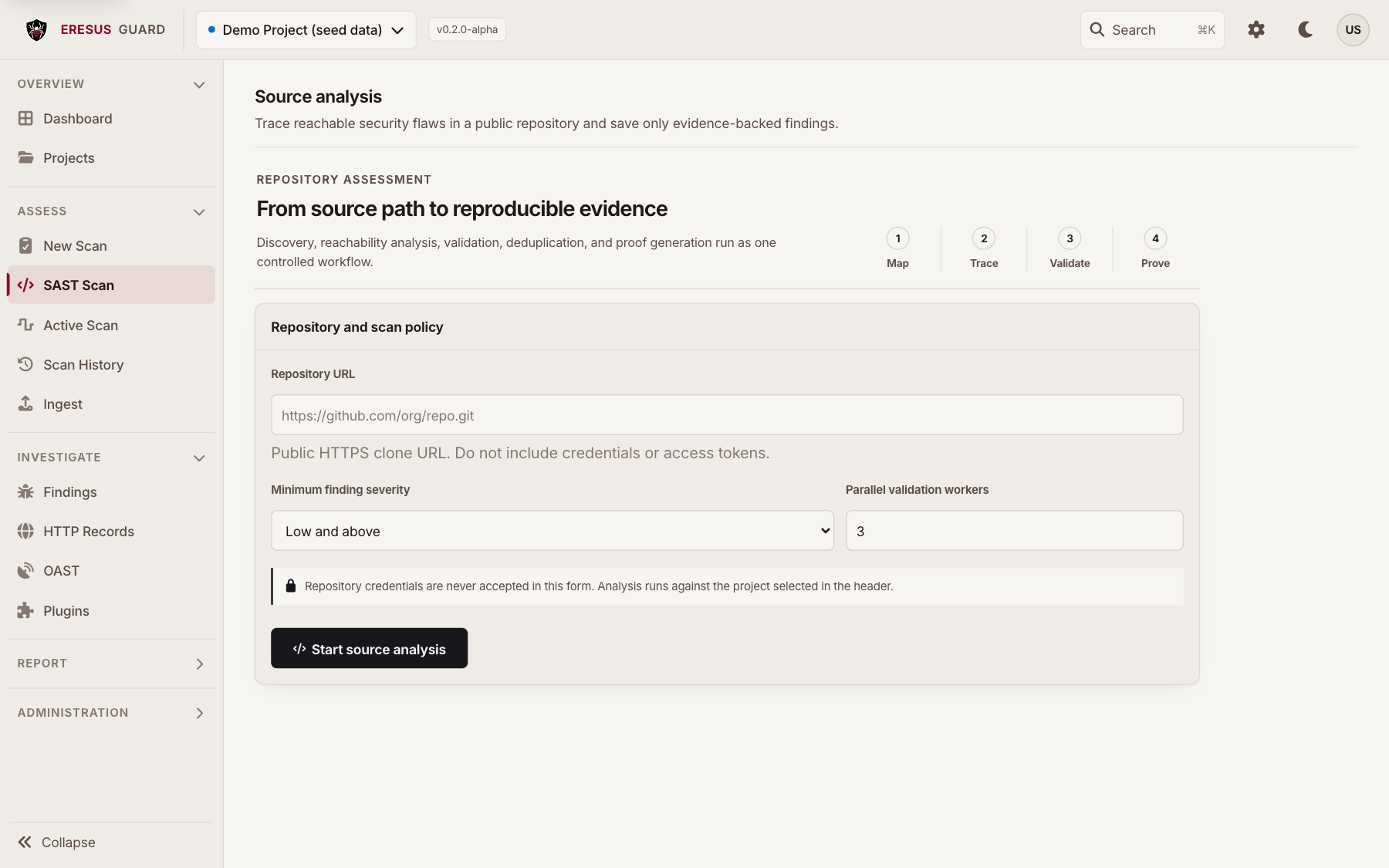
Triage the location and remediation context.
Review the finding in Workbench before rotating, revoking, or removing a suspected credential. This page deliberately avoids showing a fabricated provider validation or a customer secret.
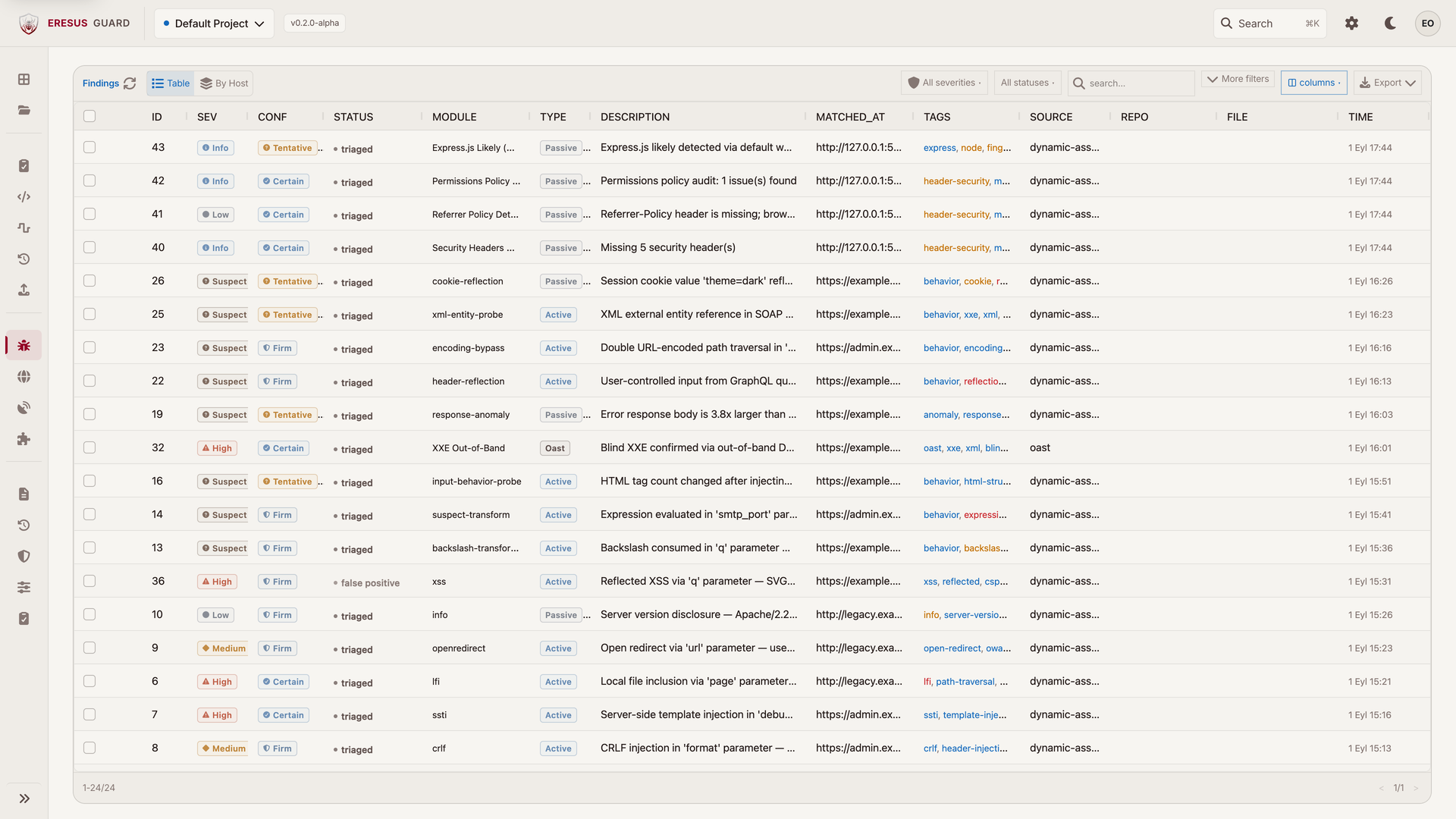
Three steps from approved scope to a reviewable result.
- 1
Provide the authorized project source and artifacts.
- 2
Run the selected secrets coverage in Workbench.
- 3
Review and remediate with the owning team before treating a match as impact.